
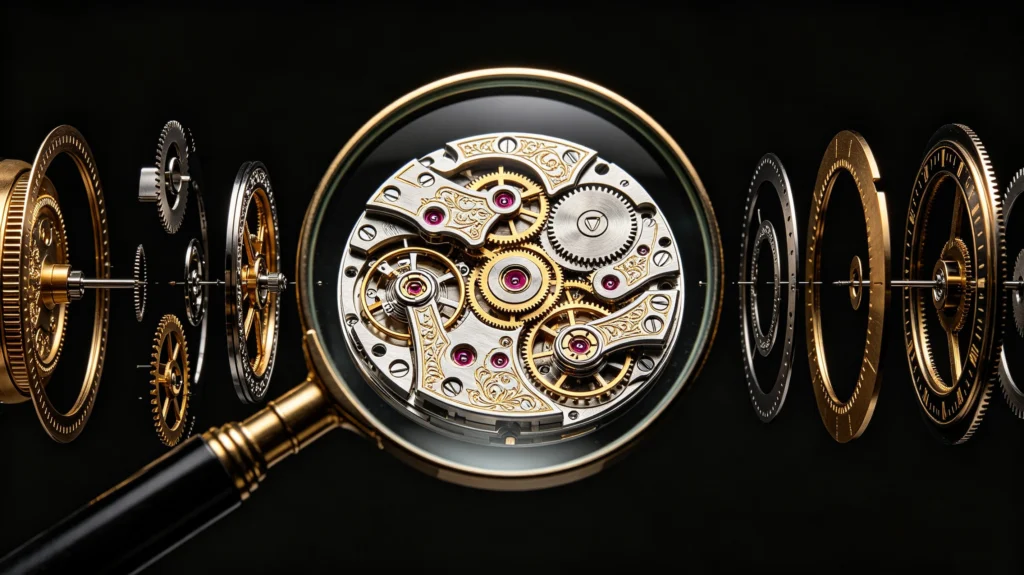
The replica watch market is a niche but globally recognized secondary industry centered on luxury watch imitations. Spanning entry-level casual copies to high-end super clones, these timepieces cater to different consumer demands while maintaining a clear tiered quality system. Unlike official brand reissues, replica watches refer to unlicensed reproductions of iconic luxury models from Rolex, Omega, and Audemars Piguet. This article provides a neutral breakdown of the four core replica watch tiers, focusing on material differences, craftsmanship standards, real-world performance, and market positioning without endorsing or legitimizing counterfeit production or trade.
At its core, replica watch tiering is defined by three key factors: material quality, manufacturing precision, and movement accuracy. Each tier targets a specific audience, from casual novelty buyers to enthusiasts seeking near-original aesthetics.
Tier 1: Entry-Level Budget Replicas
As the most basic category, entry-level replicas are the lowest-priced option on the market, typically ranging from $50 to $200. Designed for casual wear and short-term use, these watches prioritize affordability over accuracy. Manufacturers use low-grade alloy, basic mineral glass, and generic quartz movements to cut production costs.
Visually, these replicas have obvious flaws, including blurry dial printing, misaligned logos, inconsistent lume color, and mismatched case proportions. The finishing is rough, with visible edge burrs and poor polishing. Movements are unreliable, prone to time deviation, and lack water resistance. Best suited for occasional costume wear, they are easily distinguishable to watch enthusiasts and collectors.
Tier 2: Mid-Tier 1:1 Standard Replicas
The most popular mainstream tier, mid-tier 1:1 replicas occupy the $200–$400 market and balance quality and affordability. This level marks the transition from toy-like imitations to wearable daily watches. Most models adopt standard 316L stainless steel, scratch-resistant sapphire glass, and modified Asian automatic movements, greatly improving durability and timekeeping stability.
In terms of aesthetics, mid-tier replicas closely replicate the original watch’s overall shape, dial layout, and color matching. They feature basic anti-reflective coating and upgraded luminous paint, delivering a clean appearance suitable for daily wear. While flawless at social distance, minor details like shallow engravings, rough bezel edges, and imprecise internal movements still reveal inconsistencies upon close inspection.
Tier 3: High-End Factory Premium Replicas
Priced between $400 and $800, premium factory replicas represent the mainstream high-quality standard of the replica market. Produced by established specialized manufacturers, they are widely recognized for stable quality and rigorous quality control. These replicas use upgraded 904L stainless steel, the same material used in most luxury Swiss watches, along with customized ceramic bezels and enhanced anti-reflective coatings.
The biggest improvement lies in internal craftsmanship. Equipped with refined modified movements, they deliver stable accuracy comparable to entry-level luxury watches. Details like case finishing, screw alignment, and serial number engraving are highly precise, eliminating most common visual flaws. For ordinary wearers, premium replicas are nearly indistinguishable from genuine watches in daily scenarios.
Tier 4: Super Clone Top-Tier Replicas
Super clone replicas are the highest standard in the replica market, priced from $800 to $2,000 and above. Reserved for watch enthusiasts and collectors, they undergo precise reverse engineering of genuine watches, replicating every core component. Premium materials include custom-matched Swiss-grade lume, polished ceramic bezels, and accurate replica movements with modified internal structures.
Every detail, from case thickness and bracelet gap tolerance to movement decoration and waterproof performance, mirrors the original model. Top-tier factories adjust internal gears and circuits to match the original’s operation logic, ensuring stable long-term use. These replicas can only be identified through professional instrument testing and close mechanical inspection, making them the most sophisticated option in the replica market.
Final Neutral Note
It is important to clarify that replica watches are unlicensed imitations and do not compete with genuine luxury watches in terms of brand value, official warranty, and collectibility. This tier classification serves only as an objective market overview, illustrating the industry’s quality hierarchy. While the replica watch market continues to evolve in craftsmanship, it remains subject to intellectual property regulations globally, with legality varying by region.






Join the discussion
Sign in to leave a comment, attach images and react to others.